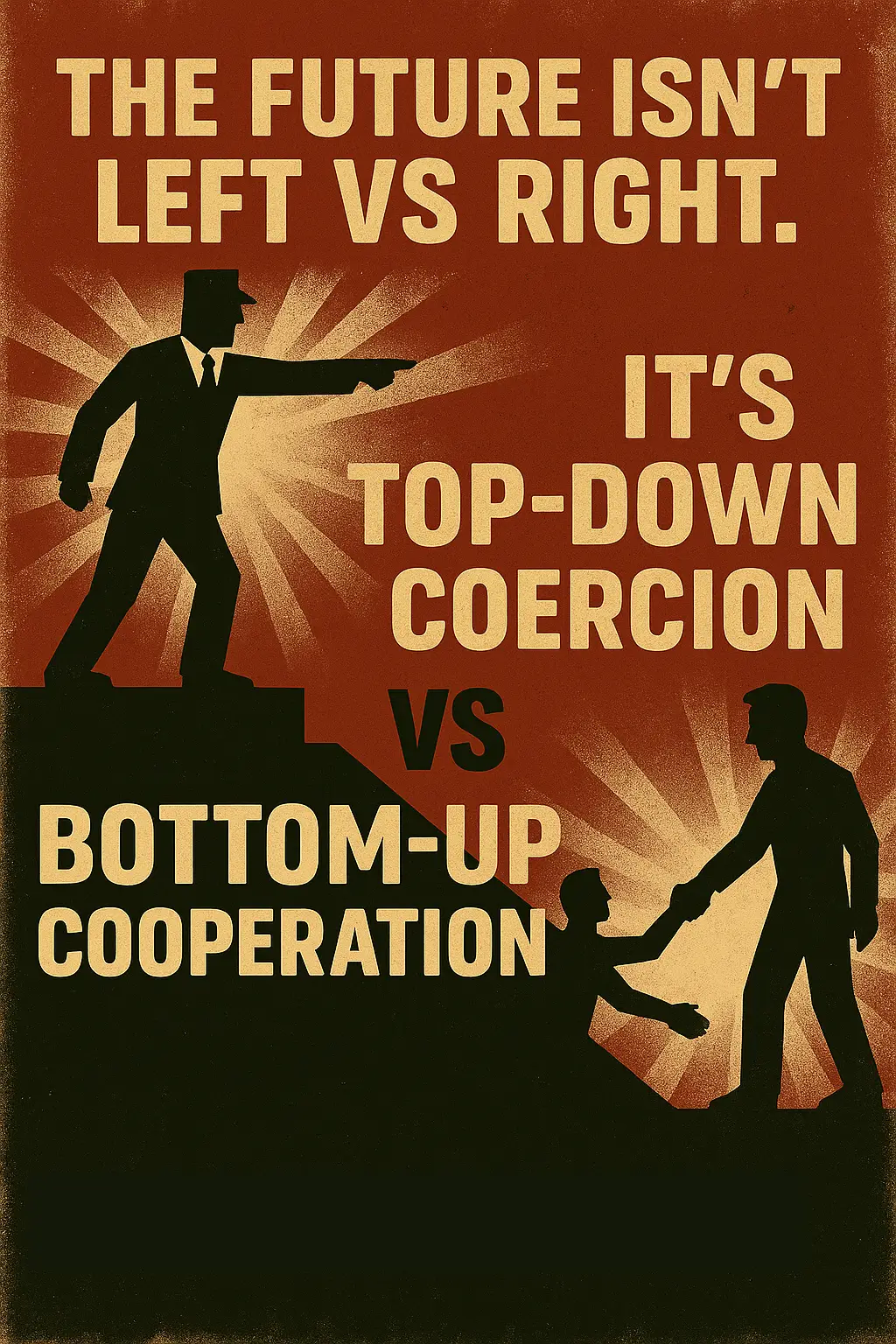

For as long as you’ve been alive, the political theater’s been running the same tired script: red team vs blue team. Left vs right. Elephant vs donkey. They keep you busy throwing rocks at each other while they’re quietly building higher walls around both of you. You’ve been tricked into thinking the fight is horizontal — neighbor vs neighbor — when it’s always been vertical.
The truth is, the real divide isn’t between “liberals” and “conservatives.” It’s between those who rule and those who are ruled. Between the few who think they own you and the many who keep letting them. You can dress that dynamic in any flag or slogan you want; it’s still the same hierarchy: top gives orders, bottom obeys.
Top-down coercion is the operating system of every government and most big institutions. Orders flow from the top, enforced by threat. It doesn’t matter who you voted for or what promises they made — the machine runs on the same fuel: obedience at gunpoint, backed by the lie that you “agreed” to it. Change the logo, repaint the cage, the bars are still steel.
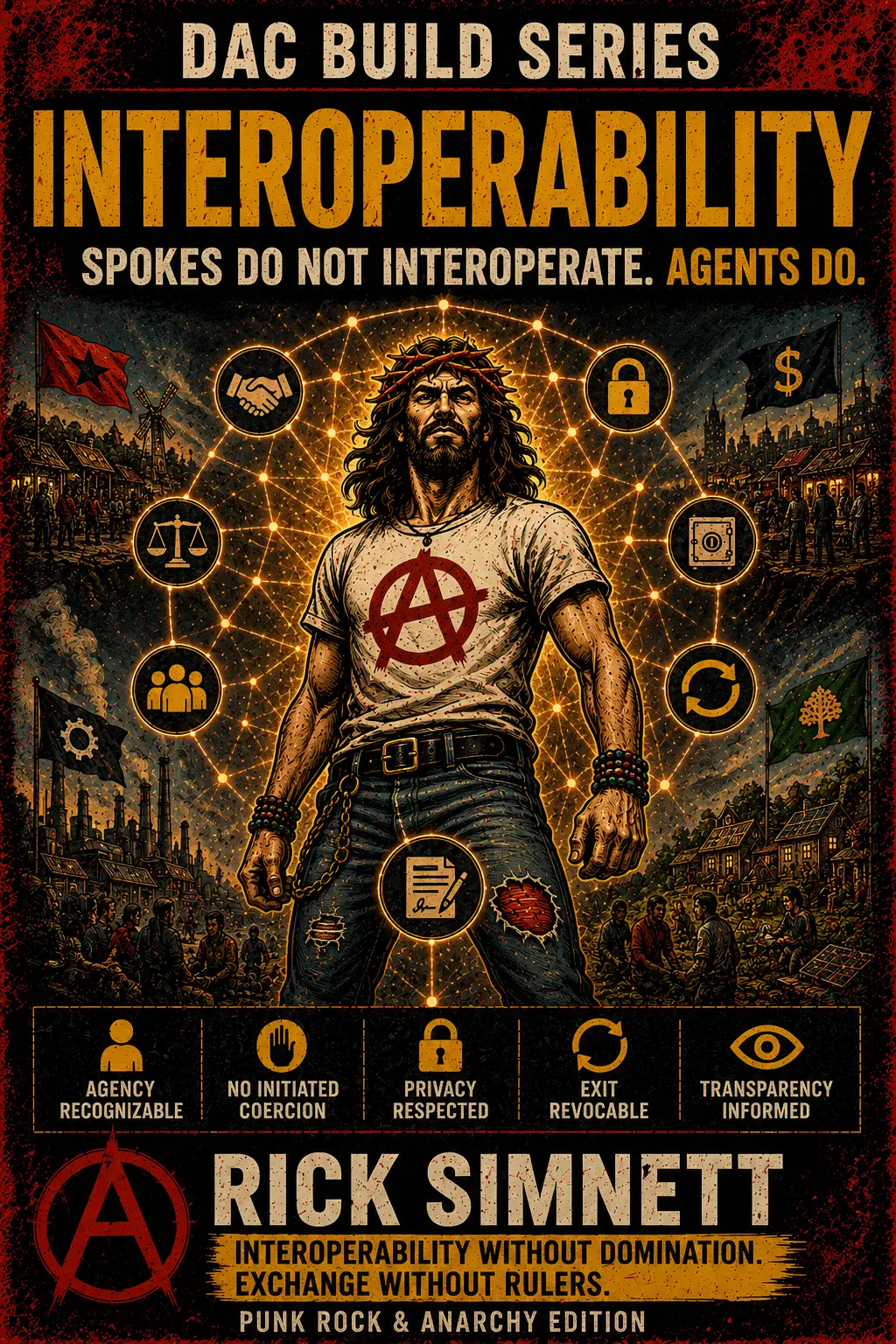
Bottom-up cooperation is the antidote. It’s what happens when people act without waiting for permission. It’s neighbors helping neighbors because it makes sense, not because some bureaucrat issued a “program.” It’s trade without middlemen, contracts without overlords, and communities where accountability is personal, not hidden behind a title, badge, or bureaucracy.
Cooperation from the bottom up doesn’t mean utopia. People will still screw up, argue, and fail. But the difference is this: without a coercive top, those failures are local, fixable, and don’t metastasize into national disasters. Mistakes don’t get propped up with endless tax dollars and armed enforcement — they die out naturally.
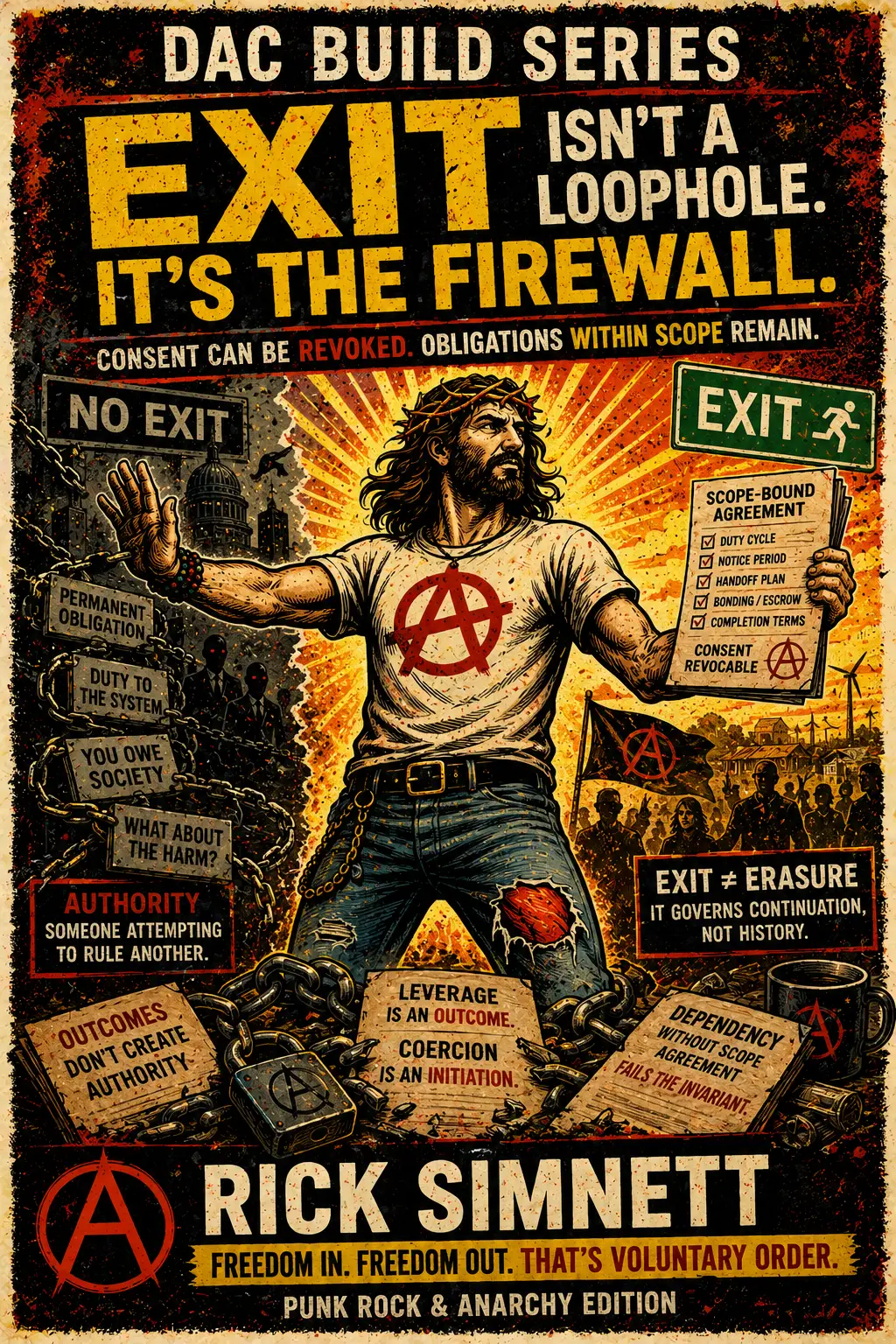
When you strip away the pomp and propaganda, you see the state for what it really is: a monopoly on violence, dressed up as “order.” And you see community for what it can be: voluntary systems that work because they have to — if they don’t, people leave, and the bad actors go broke.
The future worth fighting for isn’t one where your “side” wins and the other loses. It’s one where the entire game board is flipped, and no one has the power to cage you in the first place. Because when you end top-down coercion, the left/right divide becomes what it always was — a distraction.
Like what you read?
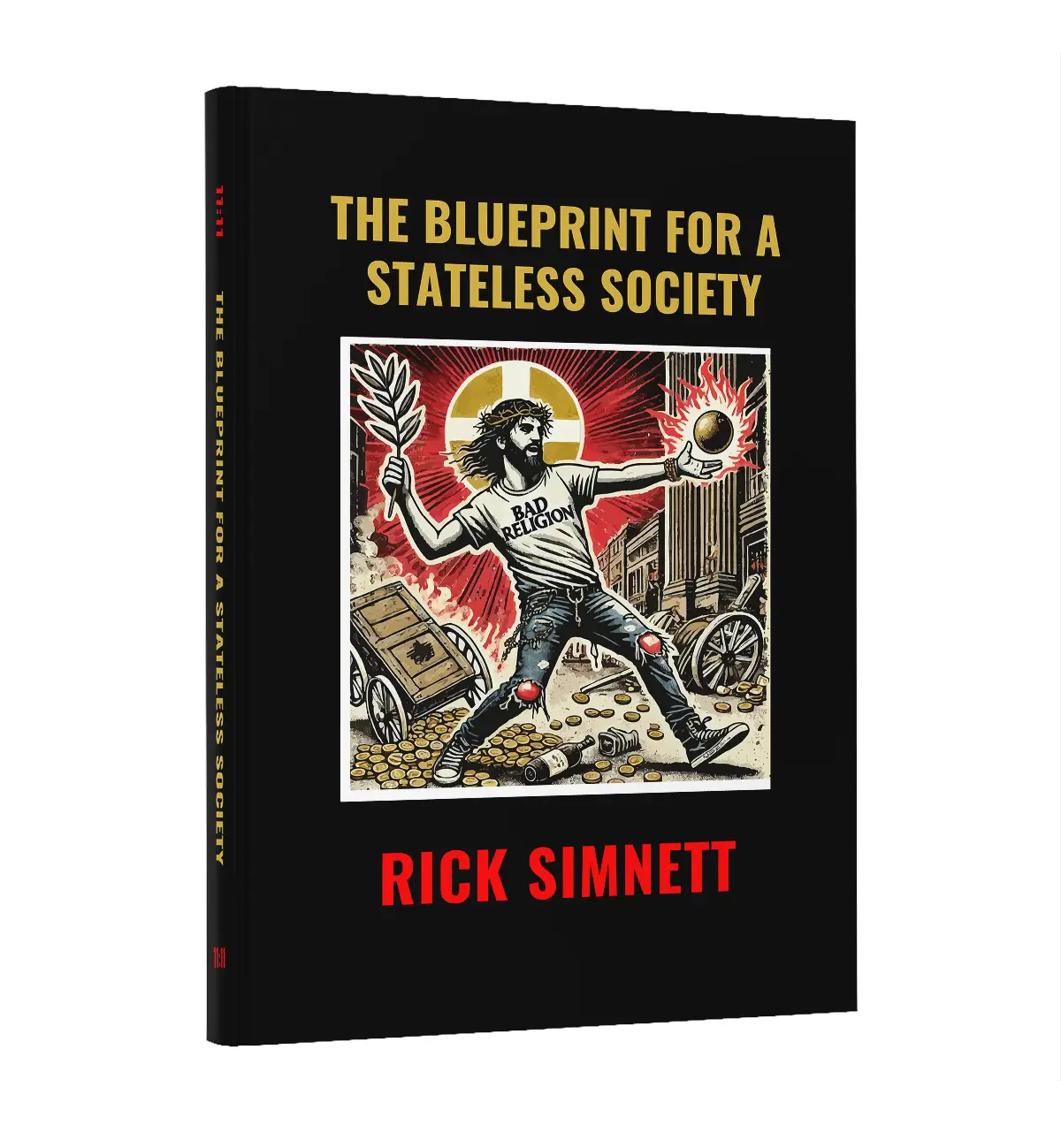
This is exactly what The Blueprint for a Stateless Society lays out — how to replace coercion with cooperation and build systems that don’t need rulers at all. Download the blueprint and see how it works in practice.