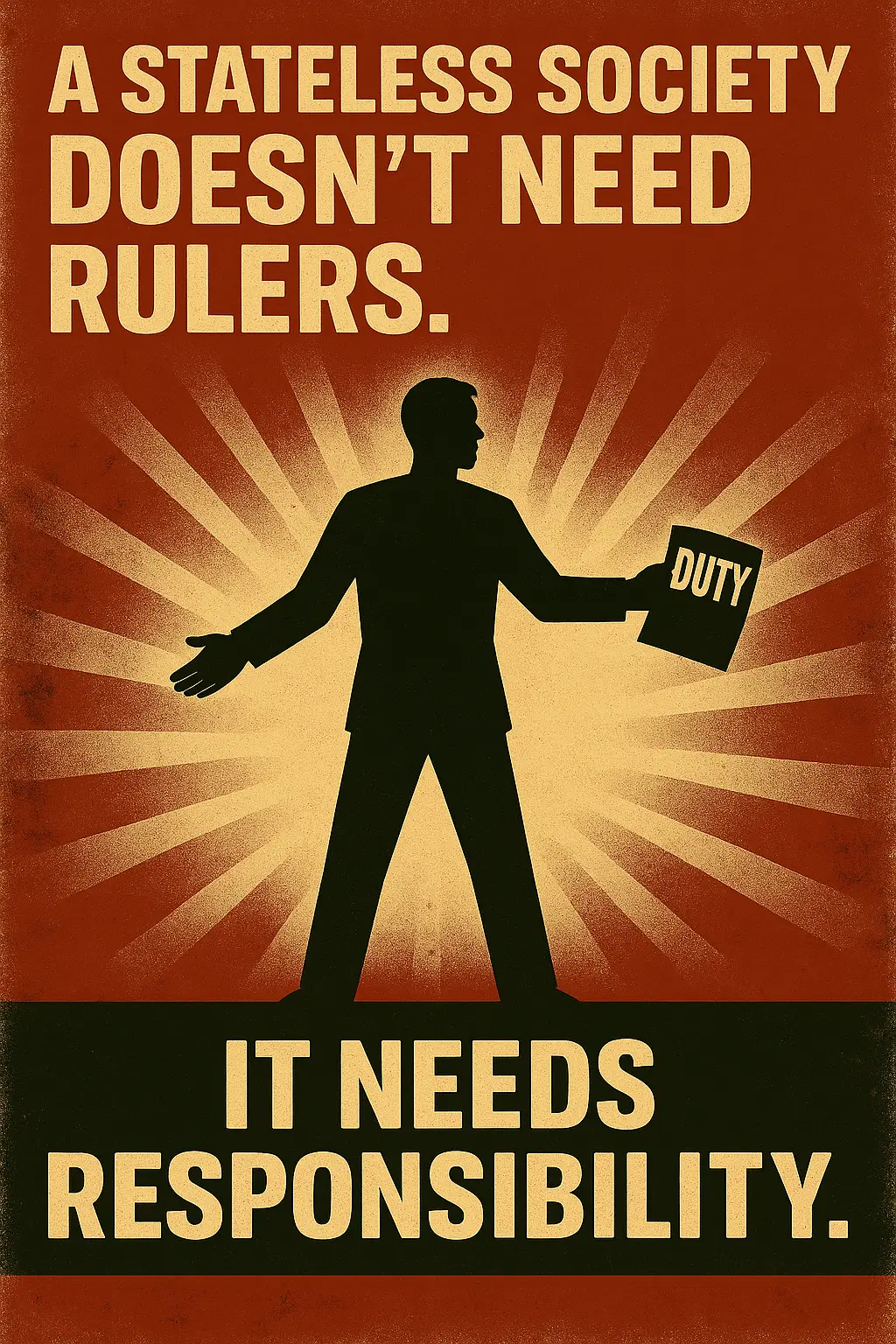

People are so conditioned to think leadership is oxygen — without it, we all suffocate. They can’t imagine a world without rulers because they’ve been taught that “no rulers” means chaos, warlords, and Mad Max running the grocery store. That’s state propaganda at its finest.
Here’s the truth: leadership and rulership aren’t the same thing.
Leadership is earned through trust, skill, and contribution.
Rulership is enforced through coercion, threat of violence, and a monopoly on force.
One inspires; the other commands.
One can be replaced voluntarily; the other must be overthrown.
The problem with rulers isn’t just that they’re corrupt — it’s that the very position of ruler requires controlling others. The job description is coercion. It doesn’t matter if the ruler is a king, a president, or your friendly neighborhood council chair. If they can use force to get compliance, you’re not dealing with leadership — you’re dealing with rulership.
The Responsibility Gap
The biggest lie the state sells is that without rulers, people won’t do the “right thing.” What they really mean is: without rulers, you’d be free to make choices they can’t control — and that scares them. But responsibility isn’t some magic thing only granted when there’s a boot on your neck. It’s the opposite.
When there’s no one to hand your power to, you stop waiting for orders and start building. You protect what matters. You honor agreements because your reputation is your currency. You don’t need a badge to keep your word. You don’t need a law to keep your neighbor safe.
A society without rulers forces everyone to grow up. No bailouts. No “too big to fail.” If you screw people over, you’re done. If you contribute, you’re valued. It’s not utopia — there will still be jerks, cheats, and scammers — but the incentives match the ethics. Instead of protecting the worst actors because they’re “connected,” the community weeds them out naturally.
Responsibility as a Survival Skill
In Divine Anarcho-Capitalism, responsibility isn’t optional — it’s survival. The network only works if people show up, follow through, and keep their promises. There’s no central bank to paper over your failures. There’s no bureaucracy to “manage” the consequences of your bad decisions.
When your reputation is your bank account, your character is your collateral. That changes behavior faster than any law ever could. You can ignore a cop. You can bribe a judge. But you can’t buy back the trust you lose when you burn someone in a voluntary system.
The State’s Dependency Addiction
The state wants you to believe you need rulers so you’ll never take full control of your own life. Rulers survive by convincing you that without them, you’re helpless — that you’re too stupid, too selfish, too dangerous to be free. That dependency is their business model.
We say screw that. You don’t need a master. You need to be the kind of person who doesn’t need one.
That’s the real revolution. Not replacing one ruler with another. Not swapping the red team for the blue team. But replacing the idea that anyone should rule you at all — with the truth that you’re capable of ruling yourself.
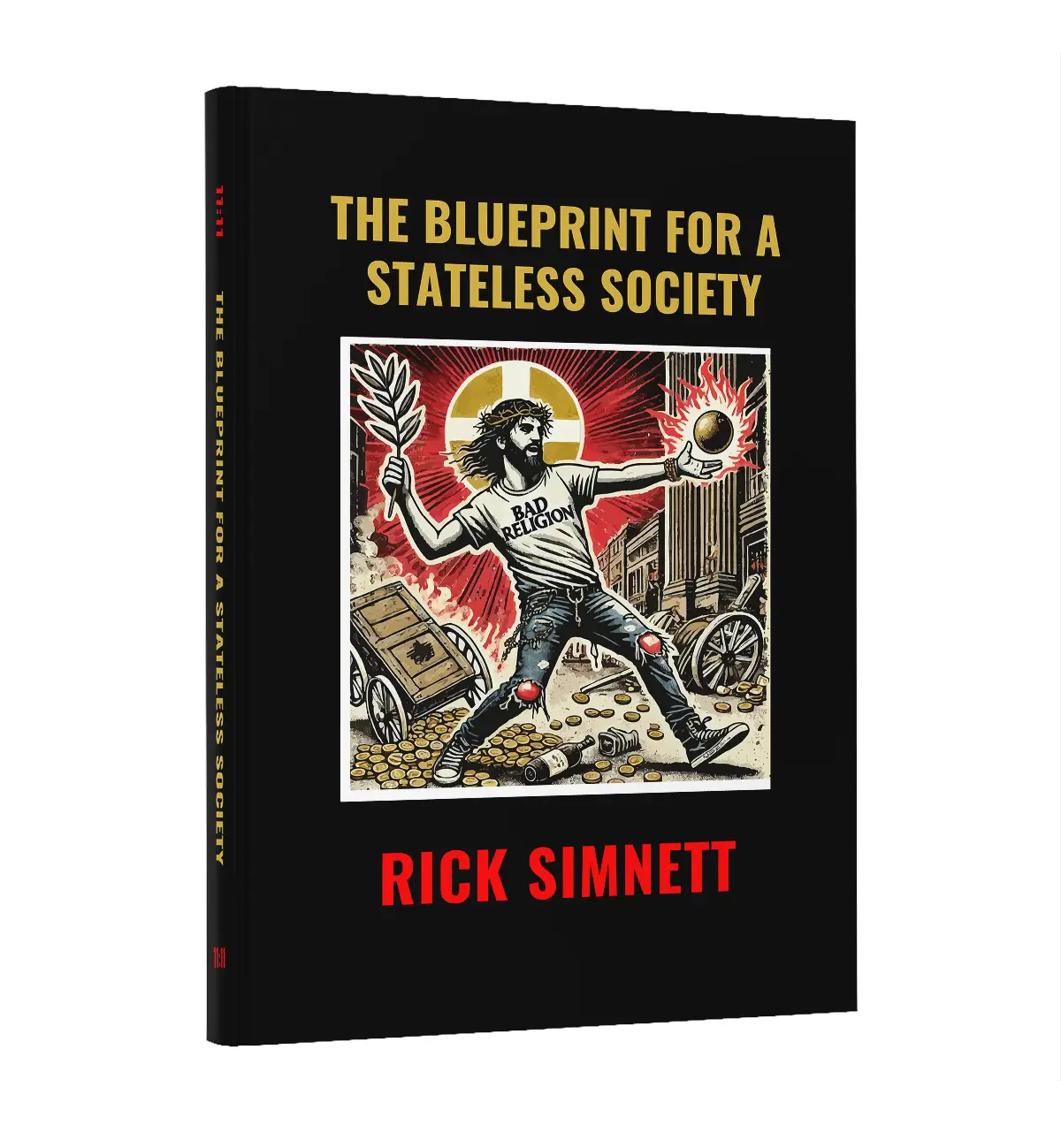
This is exactly what The Blueprint for a Stateless Society lays out — a world where every interaction is built on consent, not coercion. It’s not just a philosophy; it’s a framework for scaling voluntary exchange from a simple handshake to entire societies.
Download the Blueprint and see how responsibility replaces rulers without chaos.