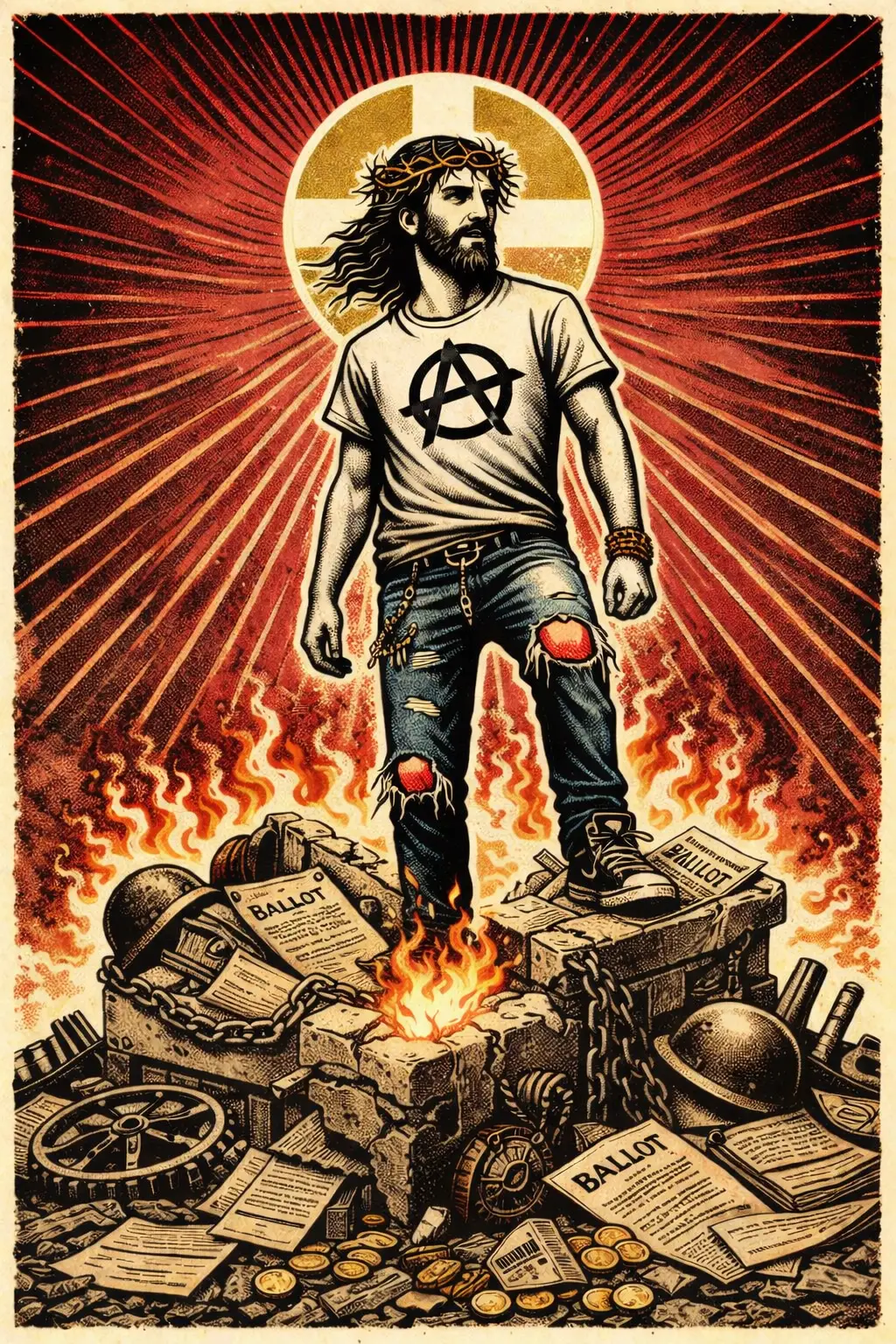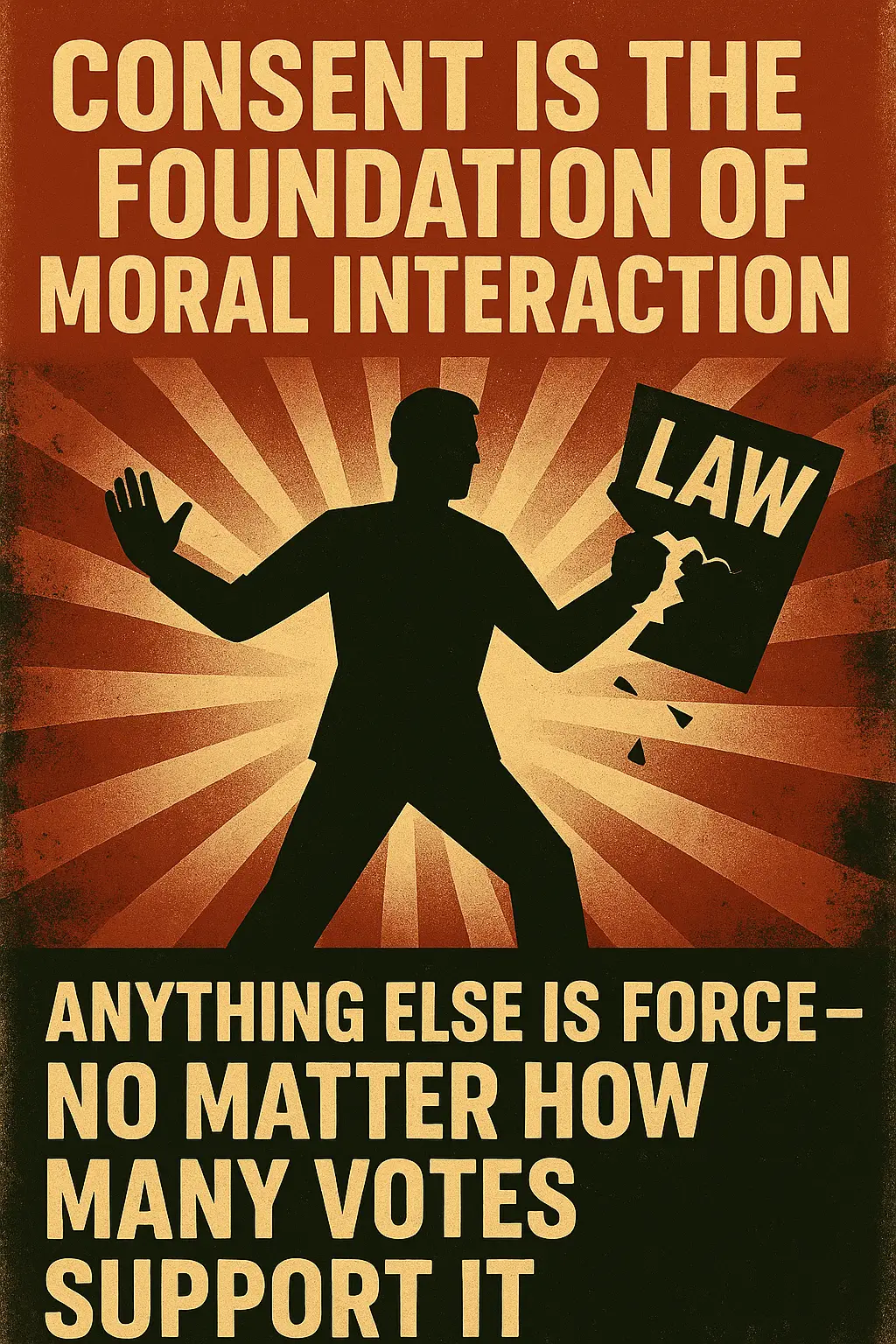

They love to quote “the will of the people” like it’s some magical moral talisman. A thousand votes do not make injustice just. Public approval doesn’t moralize force — it legitimizes coercion. Without consent from the individual, it’s still force.
Democracy Doesn’t Replace Moral Consent
Imagine stripping you of your property because a majority voted for it. Still theft. Imagine someone invading your home because “we all agreed”—still trespassing. Consent isn’t replaced by numbers. It’s not “more moral” because enough people agree. If you didn’t freely give permission, it’s force — even if you’re outvoted.
Why Consent Matters More Than Popularity
At the core of ethical interaction is voluntary agreement: “I agree to this, on my terms.” That’s it. Without that, every handshake, contract, or pledge is a trap.
Philosophers call this the Gate‑Opener Model: consent gives you control over what others may do to you. It doesn’t matter if a mob demands something — unless you consent, it remains an act of violence.
Some thinkers go further with a Relational Model: consent isn’t just control — it enables genuine connection. When your consent is recognized, it builds a shared understanding that’s the only legitimate bedrock for interaction, intimacy, or transaction. Cambridge University Press & Assessment
The DAC Model: No Consent, No Contract, No Entry
In Divine Anarcho-Capitalism, consent isn’t optional. It’s central. Your consent is the handshake that begins every contract, service, and society. Without it, nothing happens — no trade, no protection, no justice.
Want a community’s rules? You must explicitly opt in. Want protection? Pay for it willingly, or go find another provider. No consent = no forced participation, no coerced taxation, no “regulated freedom.” Just pure voluntary engagement.
Why This Matters
When consent becomes a footnote, you’re left at the mercy of the rule-makers. Even if the “system” claims it’s democratic, if your individual autonomy is ignored, that’s still tyranny — masked by paperwork and voting booths.
Consent isn’t just another pillar of morality — it is the foundation. Betray it, and everything built on it collapses into coercion.
Like what you read? This is what The Blueprint for a Stateless Society advocates — building interactions on consent, not coercion. Want to see how it scales from handshake to whole societies? Download the blueprint and check it out.