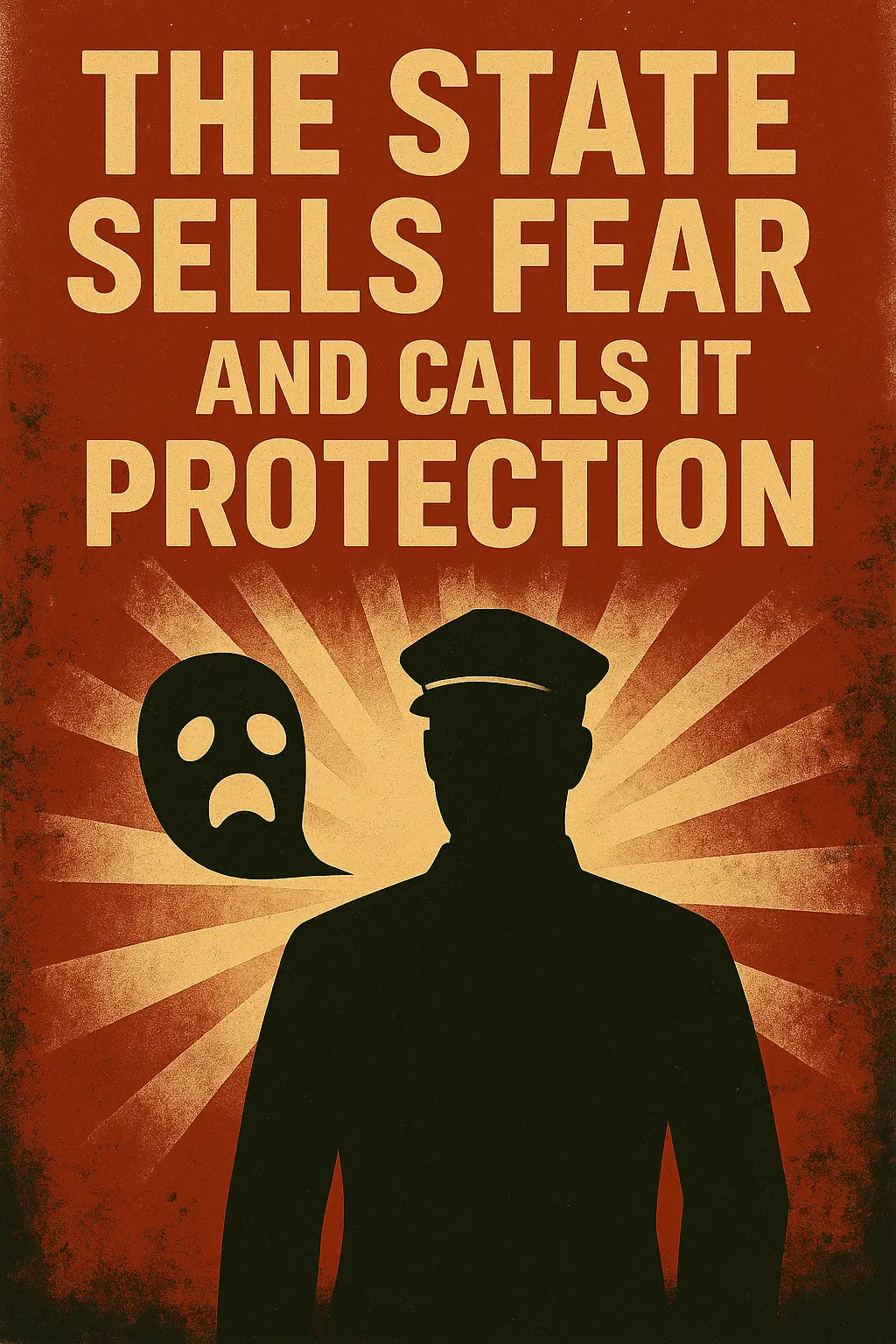

If you want to understand how the State maintains control, you have to strip away the euphemisms, slogans, and patriotic jingles. You have to see the game for what it is. At its core, the State is a marketing machine for fear. It packages threats—real, imagined, and exaggerated—and sells itself as the only thing standing between you and catastrophe.
It’s a hustle as old as civilization:
- Convince the population that danger is everywhere.
- Position yourself as the sole source of safety.
- Collect payment—through taxation, regulation, and obedience—whether they want it or not.
Governments thrive on fear because fear creates compliance. A confident, self-reliant population is hard to control. A fearful one will accept almost any infringement on liberty if it’s framed as “for your safety.”
Manufactured Threats and Inflated Dangers
Sure, there are real dangers in the world—crime, disasters, pandemics. But the State rarely lets a crisis go to waste. Sometimes it even creates them. More often, it amplifies them, turns up the volume, and uses them as pretexts for more power.
Terrorism? The numbers are statistically insignificant compared to car accidents, but terrorism justifies massive surveillance programs and endless wars.
Drugs? The “war on drugs” has locked up millions, destroyed communities, and militarized police forces—all in the name of “public safety.”
Disease? Public health becomes a blank check for authoritarian policies that would have been unthinkable before the “emergency.”
Each “threat” becomes a tool for expanding control and normalizing the idea that without the State, society would collapse.
Fear as a Business Model
The State is not in the business of solving problems. It’s in the business of managing them—perpetually. Like a company that would go bankrupt if it cured the disease it treats, the State needs danger to justify its existence. Solve the fear, and the racket collapses.
This is why wars never end, “temporary” programs never expire, and “emergency powers” become permanent. Once fear has been embedded in the public mind, it’s easy to keep it simmering forever. The State doesn’t want you to feel safe—it wants you to feel safe enough to function, but never so safe that you stop believing you need it.
The Alternative: Protection Without Coercion
Protection is a legitimate need. But it doesn’t require a monopoly backed by violence. In a truly free society, protection would be decentralized, competitive, and voluntary. Communities could choose their own methods of security, insurance, and conflict resolution—without being forced into one-size-fits-all systems run by bureaucrats with political agendas.
History shows that when protection is a service people can choose, providers have an incentive to actually keep them safe. When it’s a service imposed at gunpoint, providers have an incentive to keep them afraid.
This is Why the Blueprint Exists
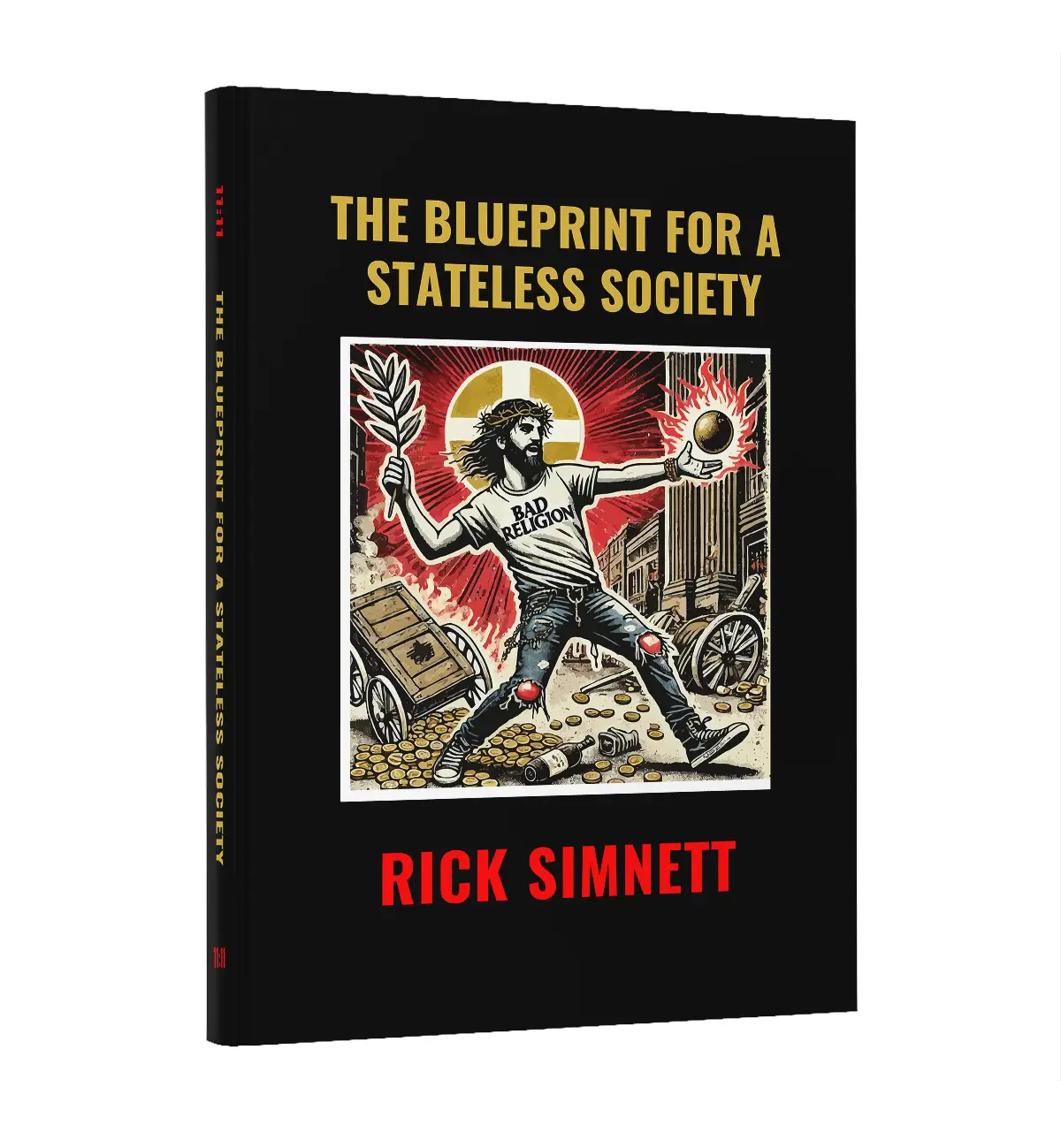
In The Blueprint for a Stateless Society, I break down how fear-based governance works—and more importantly, how to replace it. The solution isn’t to swap one political party for another; it’s to dismantle the monopoly on violence entirely and replace it with networks of voluntary cooperation.
Fear is the fuel of coercion. Remove the fuel, and the machine stalls. When people realize they can protect themselves, cooperate freely, and solve problems without institutionalized force, the State’s primary weapon—fear—loses its power.
Like what you read?
This is exactly what The Blueprint for a Stateless Society advocates—building safety and prosperity on consent, not fear and coercion. Want to see how it works in practice? Download the Blueprint and explore the framework for a society that protects freedom instead of undermining it.