
Every few years, the circus comes to town.
The banners are hung, the debates staged, and the promises roll out like candy from a parade float. Politicians tell you they’ll fix what’s broken — if only you’ll give them the keys.
You’re told it’s your duty to vote. That if you don’t participate, you “have no right to complain.” That voting is the sacred ritual that makes you free.
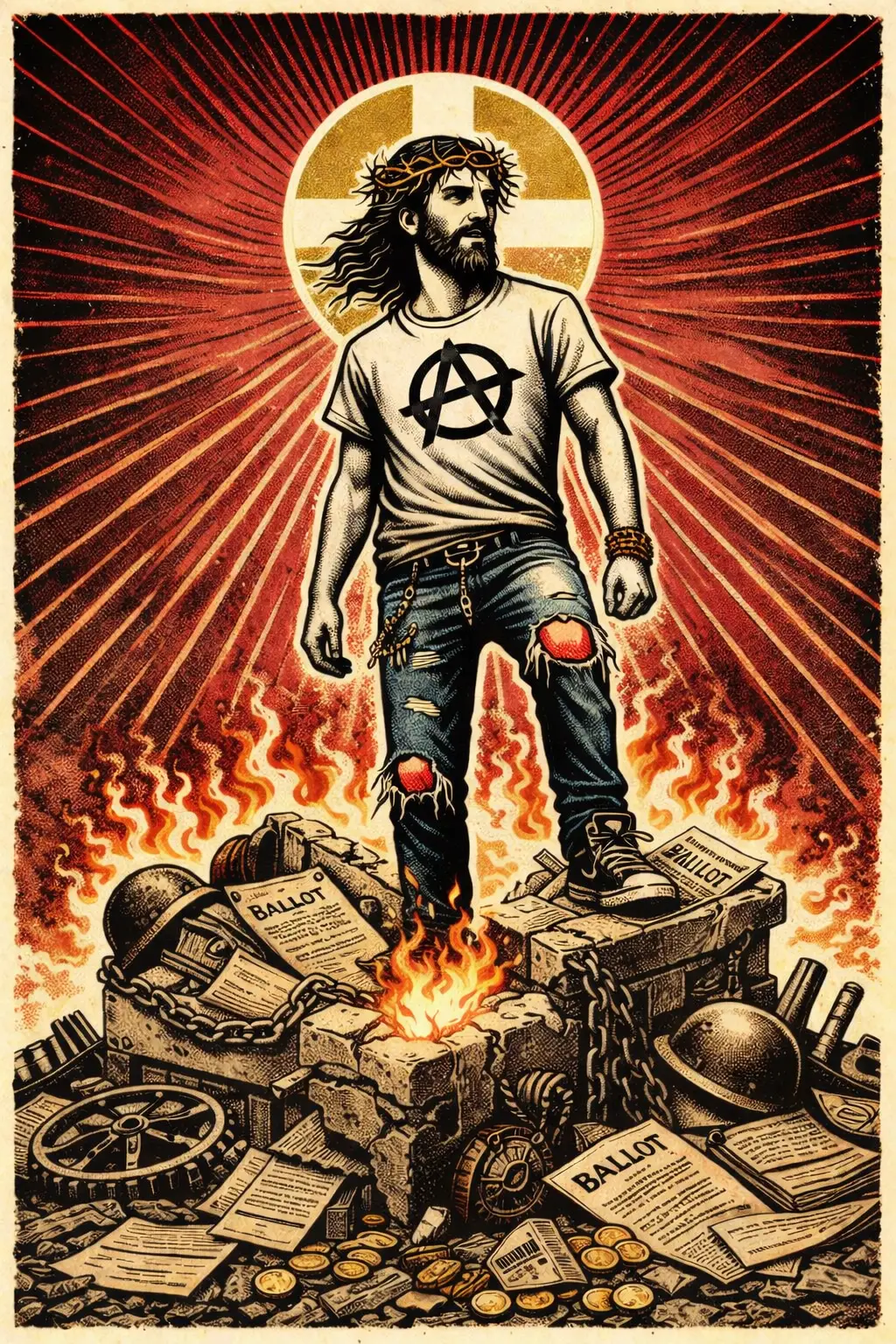
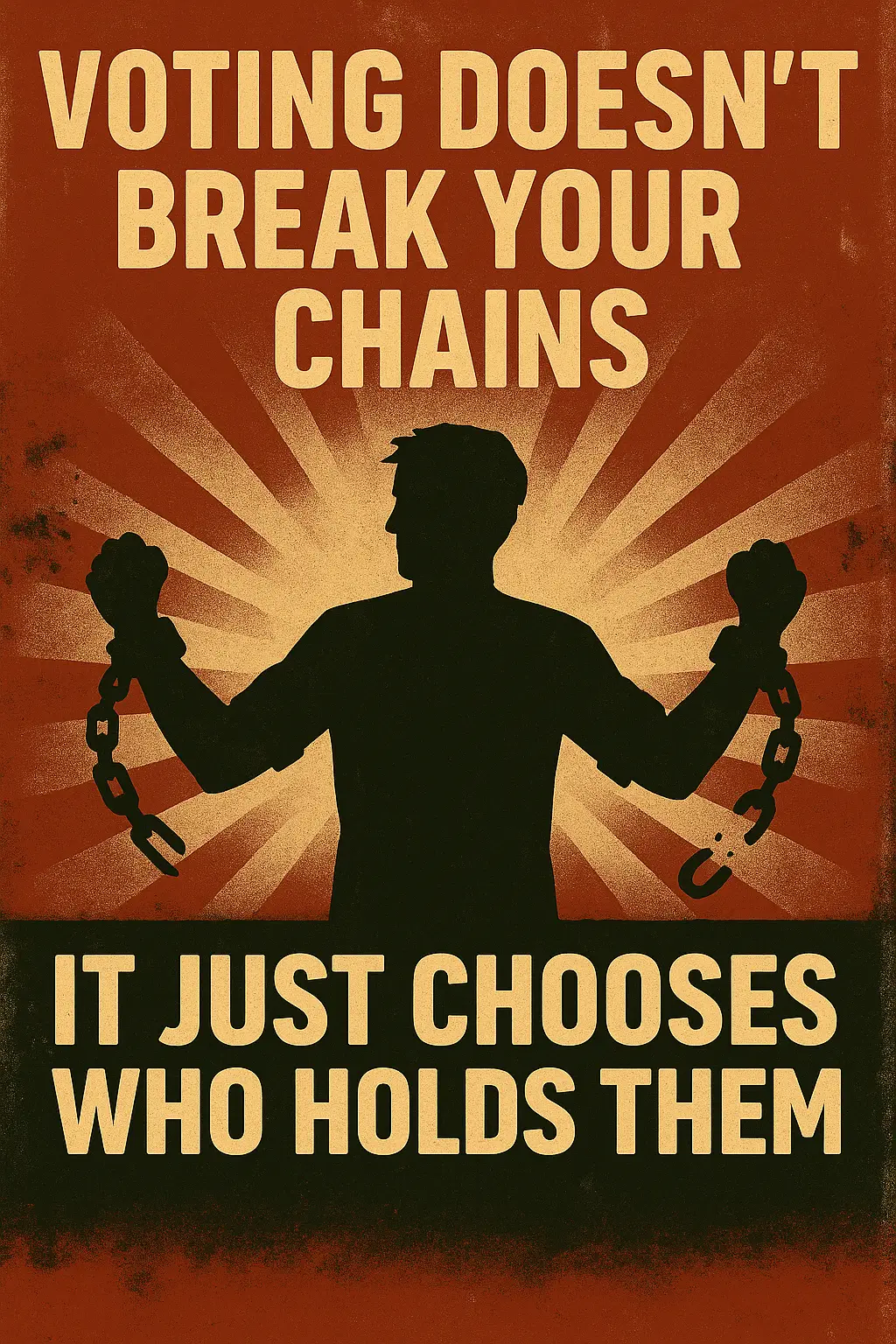
But here’s the truth: voting doesn’t make you free — it just decides who gets to manage your captivity.
The Illusion of Choice
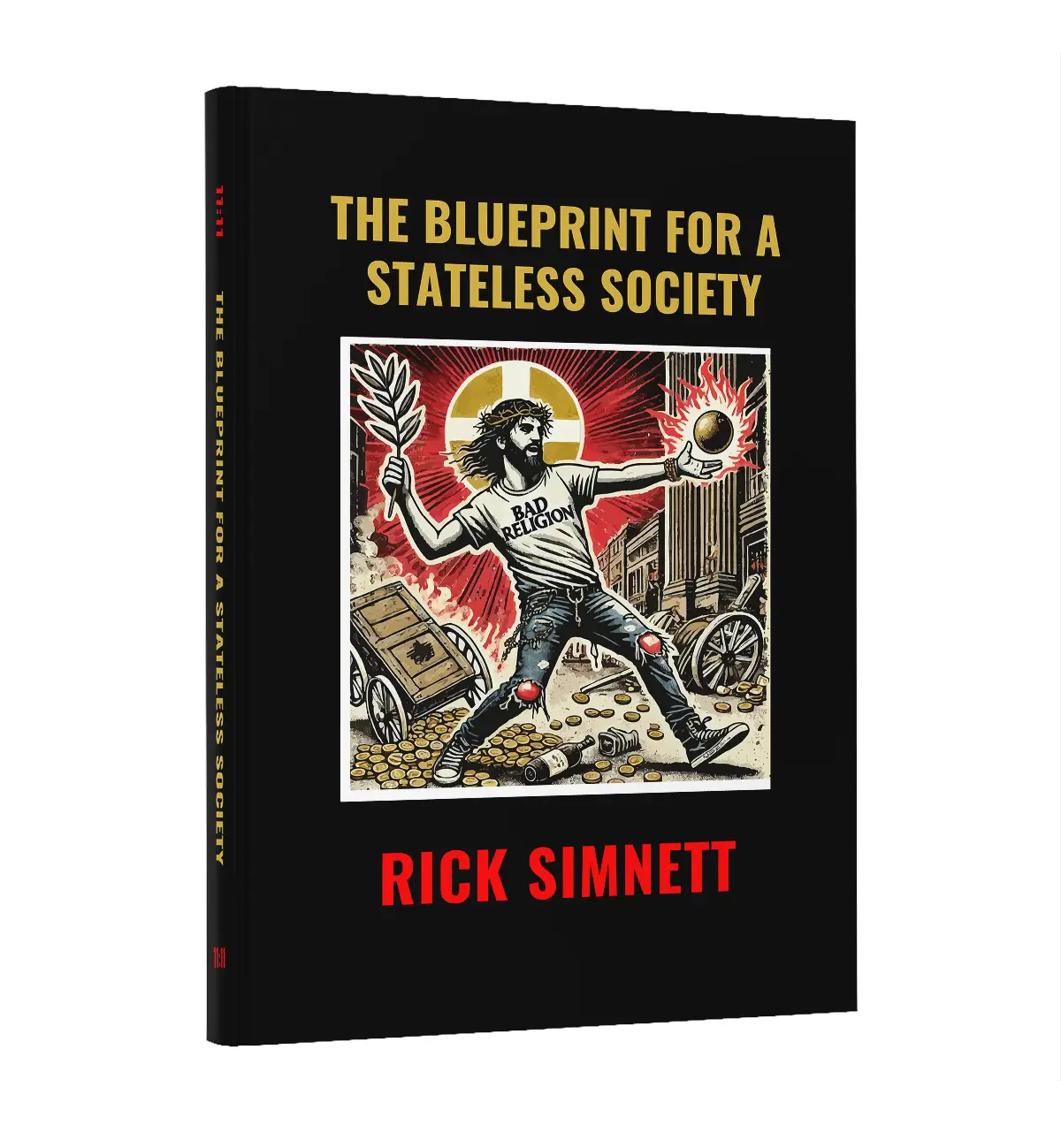
In The Blueprint for a Stateless Society, I make it clear: democracy is not the antidote to tyranny — it’s just a slower-acting version of it.
The system gives you two, maybe three, pre-approved choices. They may argue about the details, but they agree on the fundamentals: taxation stays, surveillance stays, the monopoly on law stays.
You can pick the warden. You can repaint the cell. But the prison still stands.
And if you think your single vote is the deciding factor, consider the math: the larger the population, the less your vote matters individually. Yet the system keeps you emotionally invested because an obedient population is easier to manage when it believes it has a say.
Chains Don’t Disappear — They Change Hands
Throughout history, regime changes almost never dismantled the machinery of control. Whether it’s monarchs handing power to parliaments or one political party replacing another, the police still enforce the rules, the tax collectors still take their cut, and the bureaucrats still regulate your every move.
Elections are the safety valve — the thing that keeps people venting their frustration in the voting booth instead of tearing down the system that keeps them in chains.
Consent vs. Coercion
The premise of The Blueprint for a Stateless Society is simple: legitimate interaction is built on consent, not force.
Voting doesn’t change the fact that the State uses force to impose its will. Whether 51% or 99% of your neighbors agree with the decision, if the outcome is enforced at gunpoint, it isn’t voluntary — it’s coercion.
A stateless model doesn’t replace one ruler with another; it removes the position of ruler entirely. It decentralizes decision-making to the smallest unit possible: the individual. From there, people cooperate voluntarily, building networks and systems that work because participants choose to engage — not because they’re compelled by threat of punishment.
What Freedom Actually Looks Like
Imagine this:
You and your community agree on how to handle security, trade, and dispute resolution without appealing to an untouchable political class. You keep what you earn. You spend without asking permission. You trade with whomever you choose. Your rights aren’t “granted” by a constitution; they’re inherent and non-negotiable.
That’s the reality The Blueprint for a Stateless Society lays out — a system that doesn’t need elections because it doesn’t need rulers.
Stop Choosing Your Chains
As long as you believe the vote is your path to freedom, you’ll keep reinforcing the very system that holds you down. The way out isn’t through a better candidate or a different ballot measure — it’s through building parallel structures and opting out of coercive systems entirely.
Voting is a ritual that keeps you tethered to your captors. Real freedom begins when you recognize the chain — and refuse to hand it to anyone else.
Like what you read?
This is the foundation of The Blueprint for a Stateless Society — building interactions on consent, not coercion. The book takes this principle and scales it from a handshake between two people to an entire global framework. Download it, read it, and see how freedom actually works when you stop waiting for permission.